

10 Apr How to Sell Training Courses Online Without Drowning in Admin
There is a moment that most training businesses recognise when selling training courses online. The client base has grown, revenue is increasing, and the commercial model is working. But somewhere along the way, each new client stopped feeling like growth and started feeling like overhead. Another purchase order to process. Another invoice cycle to manage. Another request from a client administrator asking why their users cannot log in or download their certificates. Another spreadsheet to update.
The administration is not a symptom of success. It is a symptom of infrastructure built for a smaller business that has not kept pace with the commercial operation sitting on top of it. The training businesses that scale without an operations bottleneck are not the ones that hired more administrators. They are the ones who built a platform architecture that removed the administration.
This post covers what that architecture looks like, how Accipio One Shop addresses each of the operational problems that compound as an online training business grows, and what the commercial outcomes look like when the infrastructure is built correctly from the start.
The Four operational problems that compound as your training business grows
These problems are predictable. They emerge gradually as the client base expands, which means most training businesses have already built significant operational dependency on the workarounds created to manage them before the scale of the problem becomes apparent.
The Invoicing Cycle
Corporate buyers do not pay by card at checkout. They raise purchase orders, expect invoices against those POs, pay on account within agreed credit terms, and require reconciliation when licences are used, transferred, or renewed. Every new B2B client adds another invoice cycle to manage. At five clients, it is manageable. At twenty-five, the manual overhead of invoice generation, payment chasing, and reconciliation consumes a disproportionate share of operational capacity without adding any commercial value.
Licence Tracking
Once a client has purchased a block of course licences, someone needs to track usage, allocate new learners, remove leavers, and produce completion reports on demand. If that responsibility sits with the training provider’s operations team rather than with the client’s own administrator, it does not scale. The administrative burden grows with every licence sold and every user added, creating a direct relationship between commercial growth and operational cost that erodes margin with scale.
Certificate and compliance records
For compliance and CPD training, certificates are not a cosmetic feature - they are a core part of the product. Clients in regulated sectors need verifiable, downloadable completion records on demand, often at short notice ahead of an audit or regulatory inspection. If certificate generation is manual, inconsistent, or dependent on a member of your team processing a request, it becomes a recurring support overhead and a reputational risk simultaneously.
The client portal expectation
Enterprise clients expect to manage their own users and access their own data without contacting the training provider’s team. A business that is selling training online that cannot offer genuine client self-service is positioned as a service provider rather than a platform provider. This is a commercially weaker position that creates dependency on your operations team for every routine client interaction and makes the relationship harder to scale and harder to retain.
How Accipio One Shop addresses each of these challenges
Accipio One Shop is not a payment gateway bolted onto an LMS. It is a native B2B eCommerce layer built directly into Moodle Workplace or Totara, which means it operates within the same platform, shares the same learner data, and integrates with the same administrative environment as the learning delivery itself. That distinction matters because the operational problems described above are not payment problems, they are platform architecture problems. A payment gateway resolves one of them. The integrated eCommerce layer that Accipio Shop offers resolves all of them.
Solving the Invoicing Cycle
Shop replaces the manual invoice cycle with a structured B2B payment workflow. Clients raise purchase orders within the platform; invoices are generated automatically against those POs and delivered without manual intervention. Payment reconciliation is handled within the same system rather than across spreadsheets and email threads. Multi-tier pricing allows different rate structures for different client volumes or contract levels. Moreover, these are automatically applied at the point of purchase rather than requiring manual adjustment per order. Subscription billing creates automated renewal cycles for clients on rolling access models, replacing the annual chase with a system-managed process.
Solving Licence Tracking
Shop handles bulk licence purchasing with automated allocation, tracking usage at the client level within the same platform that delivers the learning. When a client purchases a block of licences, those licences are immediately available for allocation within their environment - no manual provisioning, no spreadsheet reconciliation. Usage is visible to both the training provider and the client administrator in real time, removing the information asymmetry that creates the support requests.
Solving Certificate and Compliance Records
Because Shop operates within the LMS rather than alongside it, completion data and certificate generation are part of the same integrated system. When a learner completes a course, their certificate is generated automatically and made available for download within their learner environment. Again, no manual processing, no support request required. Client administrators can pull completion reports and access certificate records for their entire user pool at any time, giving them the audit-ready documentation their regulated sector clients require without involving the training provider’s team.
Solving the Client Portal Expectation
Accipio TMS, which works alongside Shop as part of the same integrated stack, provides each client with a white-label self-service portal. Client administrators manage their own user pools, allocate licences, remove leavers, track completion, and download certificates entirely independently. Clients can also reassign any licences if unused.
They cannot see other clients’ data or access the underlying platform configuration. The training provider sees across all clients from a single administrative view. The result is a genuine platform provider relationship rather than a service provider relationship - and an operations team that is no longer the intermediary for every routine client interaction.
Accipio Shop and TMS are separately priced additions, not bundled with LMS hosting. The investment is proportionate to the operational overhead they replace – and to the margin that overhead was consuming.
What this looks like in practice
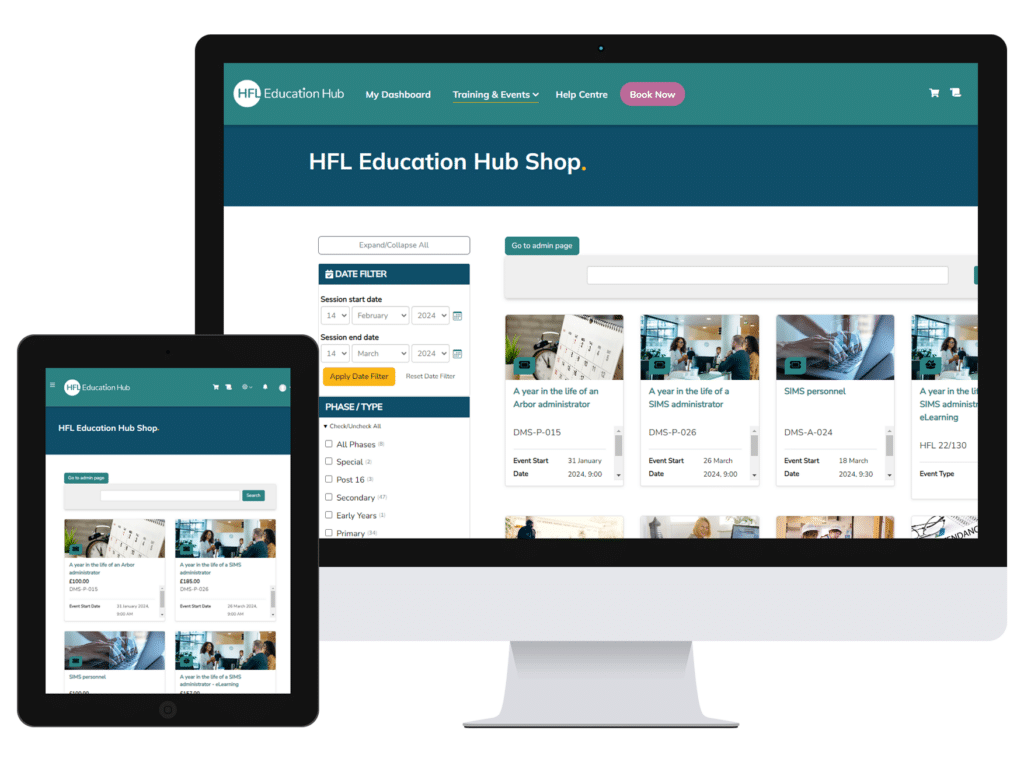
HFL Education’s results are the clearest available evidence of what the integrated architecture delivers commercially. After implementing Moodle Workplace with Accipio One Shop, HFL generated seven figures in training revenue within the first ten months of launch, processed 30,000 licences, and achieved a 40% sales uplift in markets outside Hertfordshire. The project won the Totara Award for Best Use of Integrations.
Those outcomes were not primarily a sales achievement. They were an infrastructure achievement. Without a platform that could process 30,000 licences, manage the associated invoicing and client administration, and deliver certificates automatically at scale, that volume of commercial activity would have required a proportional increase in operations headcount to manage. The platform architecture is what made the growth model viable rather than operationally consuming.
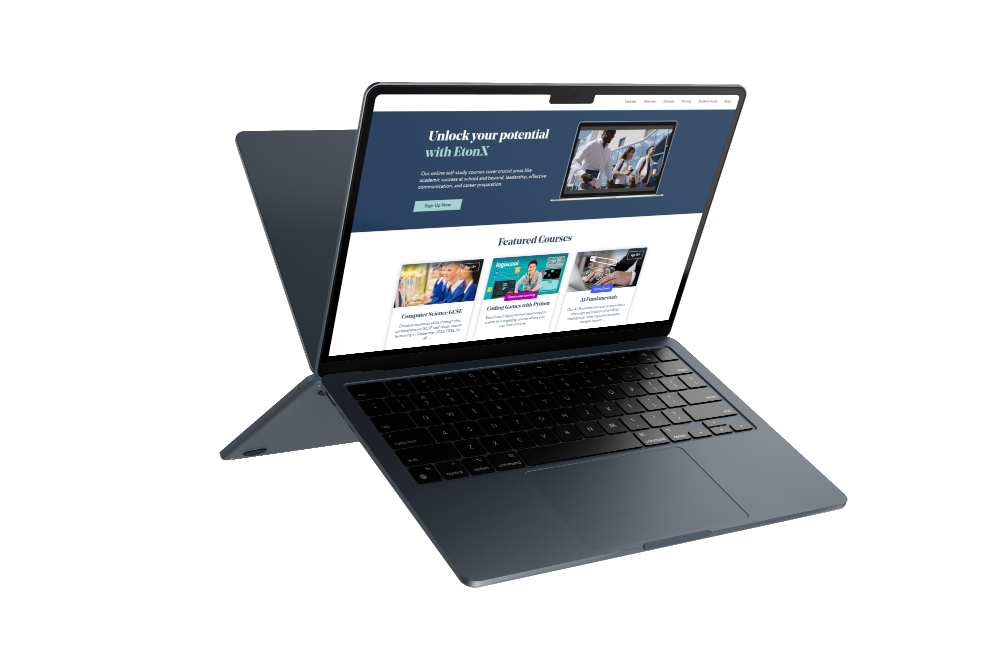
EtonX provides a complementary angle. Accipio deployed a Moodle Workplace platform scalable to 500,000 users in eight weeks, with Accipio One Shop and TMS configured to enable self-serve school onboarding. Prior to the build, adding external schools was a fully manual process. After it, schools could onboard themselves, manage their own users, and access course catalogues without the EtonX team intervening at each step. The platform supports both free access for state schools and paid access for independent and international schools – a multi-tenanted commercial structure on a single integrated learning management platform.
Both deployments share the same structural characteristic: the commerce layer, the licence management, and the learning delivery operate within the same integrated platform rather than as separate systems connected together. That integration is what produces the operational outcomes.
The Subscription Model question
Many training providers know they want to offer subscription-based access, but are uncertain about what the platform needs to support to make it work at a B2B level. Consumer subscription models, where a learner pays a monthly fee for individual access, are relatively straightforward. Corporate subscription models are more complex: an organisation pays for a rolling block of access for a defined user pool, with renewal cycles, usage reporting per billing period, and the ability to scale the licence count up or down at renewal.
Accipio One Shop handles corporate subscription billing natively, including automated renewal workflows, usage-based reporting per billing period, and the flexibility to run subscription and one-off purchase models simultaneously for different clients within the same platform. A training provider can offer annual subscriptions to large corporate clients while continuing to sell individual course access or licence blocks to smaller buyers – without managing those revenue streams in separate systems.
The commercial significance of this goes beyond convenience. Recurring subscription revenue makes a training business more predictable, more valuable, and more resilient than a purely transactional model. The platform infrastructure that enables subscription billing is not a feature decision – it is a business model decision.
Five questions to ask when evaluating your current platform

Does your platform support purchase order workflows natively, or do B2B clients have to pay by card and you issue invoices manually afterwards?

Can your clients manage their own users (adding new starters, removing leavers, allocating licences) without contacting your operations team?

Does bulk licence management sit inside your LMS or in a separate system that requires manual synchronisation?

Can you offer subscription and one-off purchase models simultaneously for different clients, or does your current setup force you to choose one?

What does your invoicing and reconciliation process look like at fifty clients? If the honest answer involves more headcount rather than better infrastructure, the platform is not built for the business you are building.
The infrastructure is the growth strategy
Selling training courses online at scale is not primarily a sales challenge or a content challenge. It is an infrastructure challenge. The training businesses that grow without operational bottlenecks are the ones that built a platform where B2B commerce, licence management, client administration, and learning delivery operate as a single integrated system and not as separate tools connected by APIs and manual processes.
Accipio One Shop, integrated within Moodle Workplace or Totara learning platforms, is that system. It is not a bolt-on. It is the architecture that removes the administration, devolves the client management, and makes the commercial model viable at the scale you are building toward.
Book a discovery call to talk through your current platform architecture, your client mix, and your revenue model.
We will give you a direct assessment of whether your infrastructure will scale with your commercial ambitions and what a well-built alternative looks like if it will not.